Word 2013
Headers, Footers, and Page Numbers

Introduction
The header is a section of the document that appears in the top margin , while the footer is a section of the document that appears in the bottom margin . Headers and footers generally contain additional information such as page numbers , dates , an author's name , and footnotes , which can help keep longer documents organized and make them easier to read. Text entered in the header or footer will appear on each page of the document.
Optional: Download our practice document .
To create a header or footer:
In our example, we want to display the author's name at the top of each page, so we'll place it in the header.
-
Double-click anywhere on the
top or bottom margin
of your document. In our example, we'll double-click the top margin.
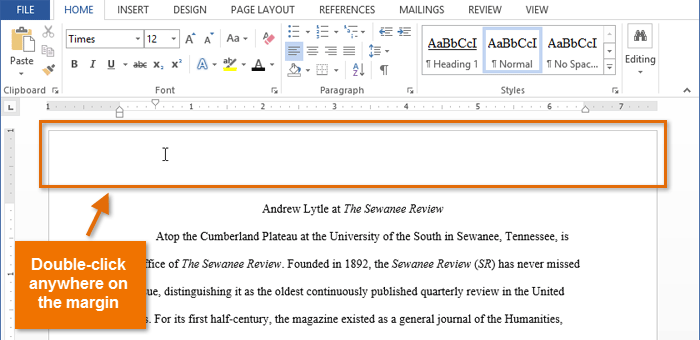 Double-clicking on the header
-
The header or footer will open, and a
Design
tab will appear on the right side of the
Ribbon
. The insertion point will appear in the header or footer.
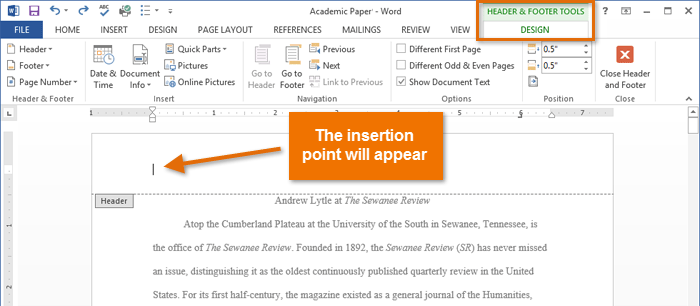 The open header
-
Type the
desired information
into the header or footer. In our example, we'll type the author's name.
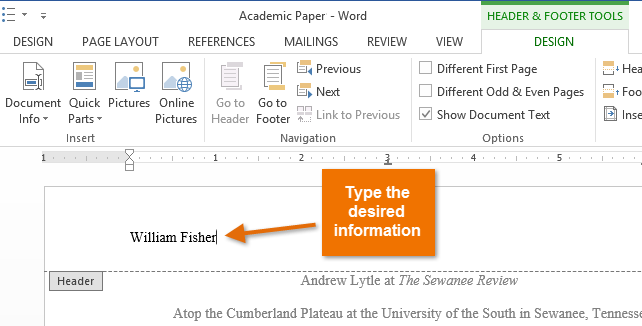 Typing text into a header
-
When you're finished, click
Close Header and Footer
. Alternatively, you can press the
Esc
key.
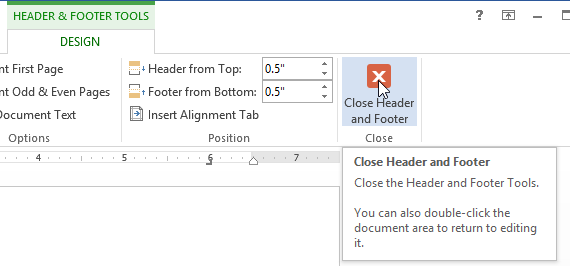 Clicking Close Header and Footer
-
The header or footer text will appear.
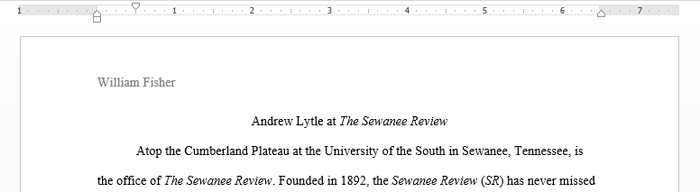 The finished header
To insert a preset header or footer:
Word has a variety of preset headers and footers you can use to enhance your document's design and layout. In our example, we'll add a preset header to our document.
-
Select the
Insert
tab, then click the
Header
or
Footer
command. In our example, we'll click the
Header
command.
 Clicking the Header command
-
In the menu that appears, select the desired
preset header or footer
. In our example, we'll select a header.
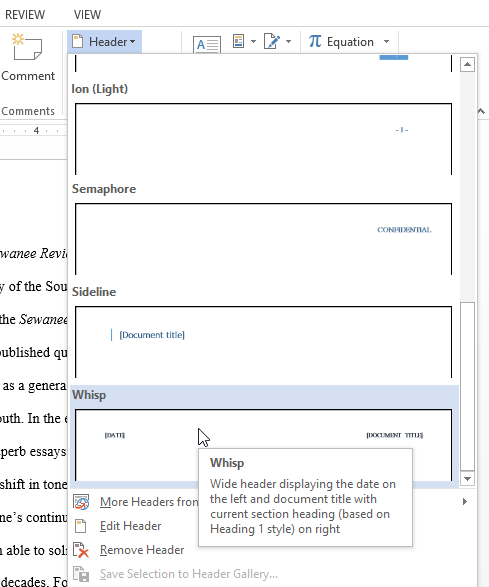 Selecting a preset header
-
The header or footer will appear. Preset headers and footers contain placeholders for information such as the title or date; they are known as
Content Control
fields.
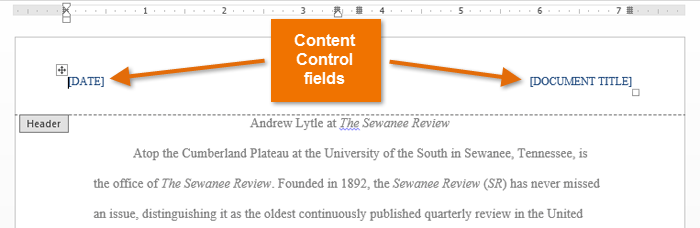 Content Control fields
-
To edit a Content Control field, click it and type the
desired information
.
 Editing a Content Control field
-
When you're finished, click
Close Header and Footer
. Alternatively, you can press the
Esc
key.
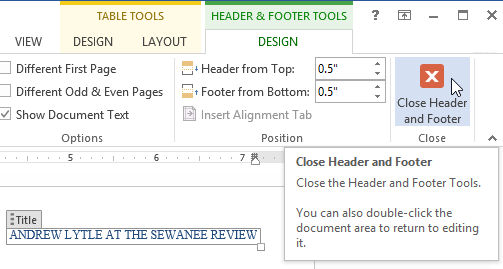 Closing the Header and Footer
If you want to delete a Content Control field, right-click it and select Remove Content Control from the menu that appears.
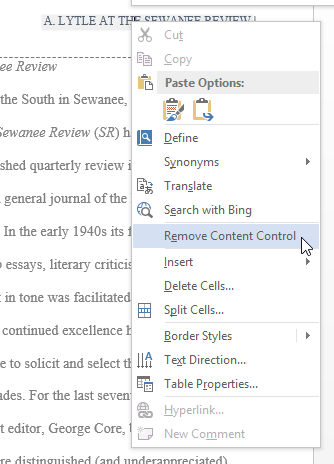 Removing a Content Control field
Editing headers and footers
After you close the header or footer, it will still be visible, but it will be locked . Simply double-click a header or footer to unlock it, which will allow you to edit it.
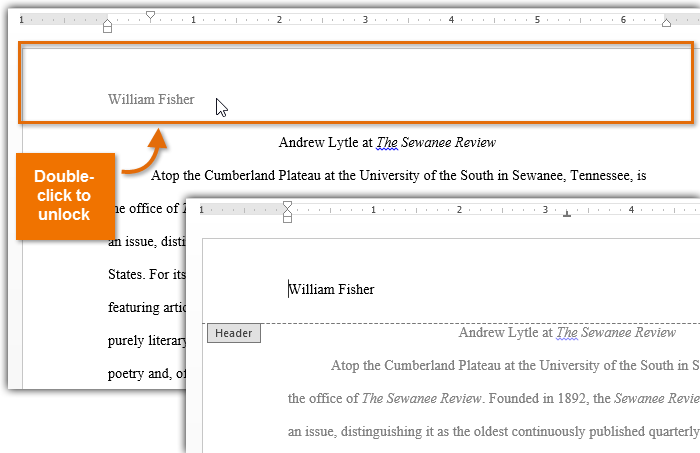 Opening a header
Design tab options
When your document's header and footer are unlocked, the Design tab will appear on the right side of the Ribbon, giving you various editing options:
-
Hide the first-page header and footer
: For some documents, you may not want the first page to show the header and footer, like if you have a cover page and want to start the page numbering on the second page. If you want to hide the first page header and footer, check the box next to
Different First Page
.
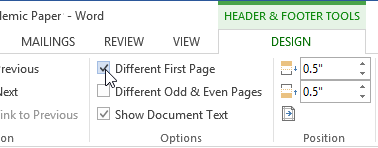 Hiding the first page header and footer
-
Remove the header
: If you want to remove all information contained in the header, click the
Header
command and select
Remove Header
from the menu that appears.
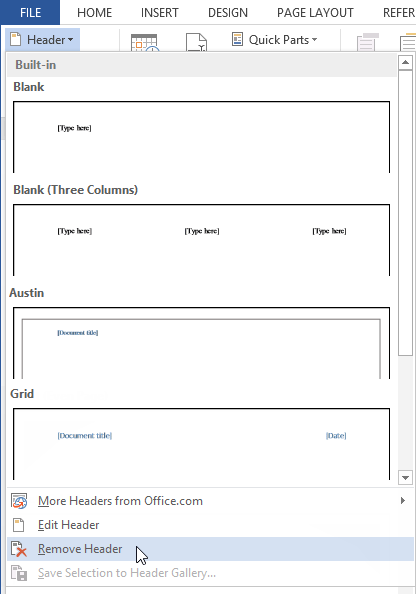 Removing the header
-
Remove the footer
: If you want to remove all information contained in the footer, click the
Footer
command and select
Remove Footer
from the menu that appears.
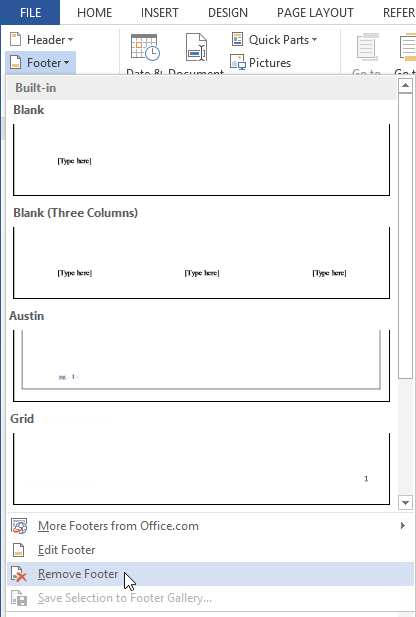 Removing the footer
-
Additional options
: With the Page Number command and the commands available in the Insert group, you can
add page numbers
, the
date and time
,
pictures
, and more to your header or footer.
 Insert group on the Ribbon
To insert the date or time into a header or footer:
Sometimes it's helpful to include the date or time in the header or footer. For example, you may want your document to show the date when it was created .
On the other hand, you may want to show the date when it was printed , which you can do by setting it to update automatically . This is useful if you frequently update and print a document because you'll always be able to tell which version is the most recent.
-
Double-click anywhere on the header or footer to
unlock
it. Place the
insertion point
where you want the date or time to appear. In our example, we'll place the insertion point on the line below the author's name.
 Placing the insertion point in the unlocked header
-
The
Design
tab will appear. Click the
Date & Time
command.
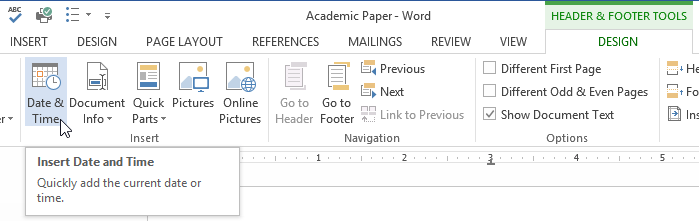 Clicking the Date & Time command
- The Date and Time dialog box will appear. Select the desired date or time format .
- Check the box next to Update Automatically if you want the date to change every time you open the document. If you don't want the date to change, leave this option unchecked.
-
Click
OK
.
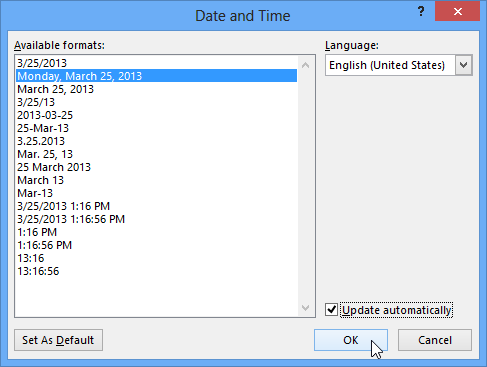 Selecting a date option
-
The date will appear in the header.
 The date in the header
Adding page numbers
Word can automatically label each page with a page number and place it in a header , footer , or side margin . When you need to number some pages differently, Word allows you to restart page numbering .
To add page numbers to a document:
In our example, we'll add page numbering to our document's footer.
-
Double-click anywhere on the
header
or
footer
to
unlock
it. If you don't already have a header or footer, you can double-click near the
top or bottom of the page
. The
Design
tab will appear on the right side of the Ribbon.
 Unlocking the footer
-
Click the
Page Number
command. In the menu that appears, hover the mouse over
Current Position
and select the desired
page numbering
style
.
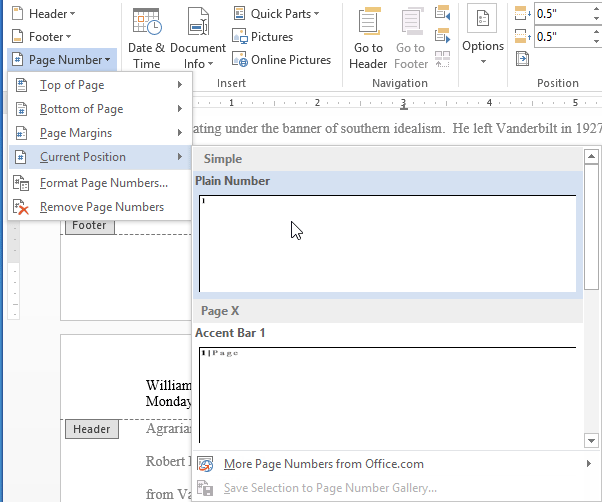 Selecting a page number style
-
Page numbering will appear.
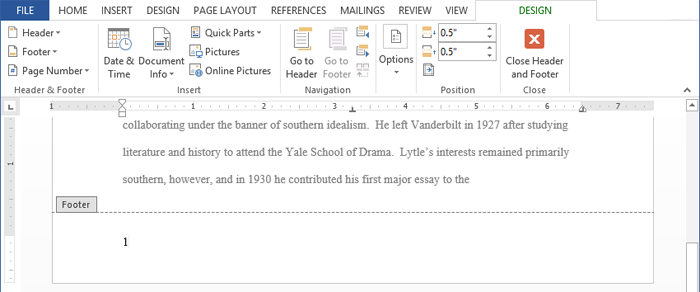 A page number in the footer
-
To edit the
font
,
font size
, and
alignment
of page numbers, select a page number and click the
Home
tab. Word's text formatting options will appear.
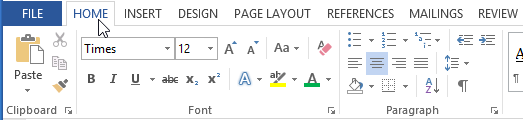 Clicking the Home tab
-
When you're finished, press the
Esc
key. The page numbering will be formatted.
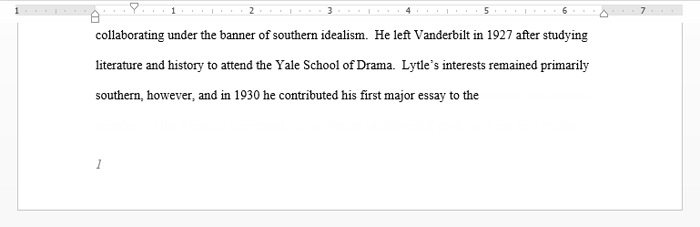 A formatted page number
Alternatively, you can add page numbers to the header or footer by clicking the Page Number command and then selecting Top of Page or Bottom of Page . If you have an existing header or footer, it will be removed and replaced with the page number.
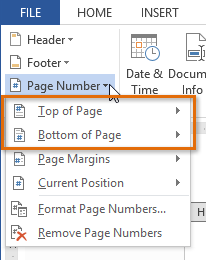 Top of Page and Bottom of Page options
To restart page numbering:
Word allows you to restart page numbering on any page of your document. You can do this by inserting a section break and then selecting the number you want to restart the numbering with. In our example, we'll restart the page numbering for our document's Works Cited section.
-
Place the
insertion point
at the
top of the page
you want to restart page numbering for. If there is text on the page, place the insertion point at the
beginning of the text
.
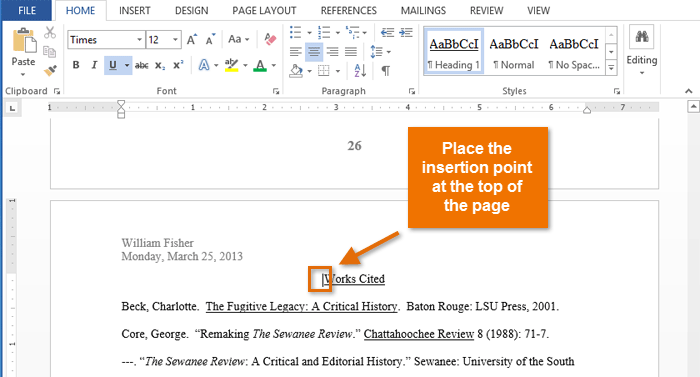 Placing the insertion point
-
Select the
Page Layout
tab, then click the
Breaks
command. Select
Next Page
from the drop-down menu that appears.
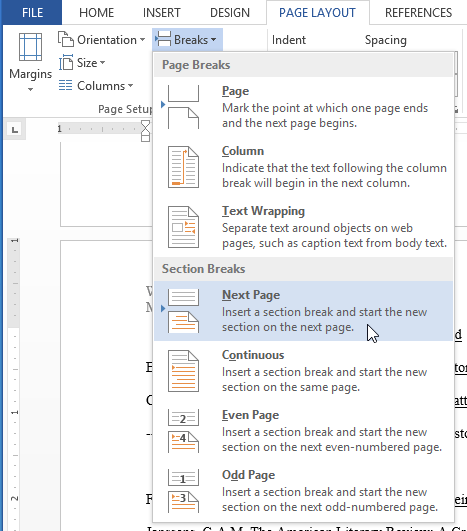 Selecting Next Page
- A section break will be added to the document.
-
Double-click the
header or footer
that contains the page number you want to restart.
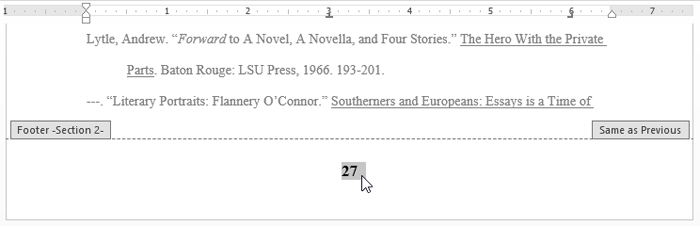 Selecting the page number to restart
-
Click the
Page Number
command. In the menu that appears, select
Format Page Numbers
.
 Formatting the page number
- A dialog box will appear. Click the Start at: button. By default, it will start at 1 . If you want, you can change the number.
-
Click
OK
.
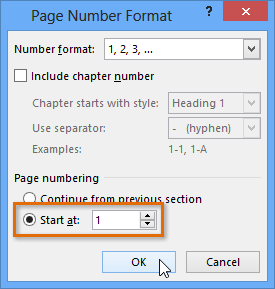 Restarting the page numbering
-
The page numbering will restart.
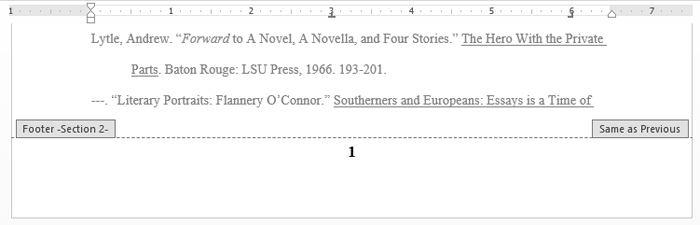 The restarted page numbering
To learn more about adding section breaks to your document, visit our lesson on Breaks .
Challenge!
- Create a new Word document. If you want, you can use our practice document .
- Create a blank header . If you're using the example, unlock the header.
- Add a name to the header . If you're using the example, type the name Tom Shelby after Professor .
- Try inserting a preset header or footer .
- Add today's date to the header . If you're using the example, add today's date below Professor Tom Shelby .
- Try adding a page number to the footer . If you're using the example, add a page number to the bottom of the page .
- Try restarting the page numbering .