Excel 2003
Applying Font, Color, and Borders to Cells

Introduction
By the end of this lesson, you should be able to:
- Apply fonts
- Apply a font color
- Apply borders
Changing font type, size, and color
In Excel 2003, a font consists of three elements: typeface , or the style of the letter; size of the letter; and color of the letter. The default font in a spreadsheet is Arial 10 point , but the typeface and size can be changed easily.
Selecting a font typeface:
The amount of typefaces available for use varies depending on the software installed on your computer.
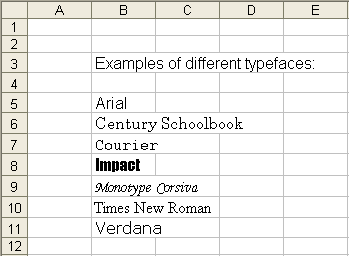
To apply a typeface to information in a cell:
- Select a cell or range of cells.
-
Click the down arrow to the right of the
font name
list box on the Formatting toolbar.

-
A drop-down list of available fonts appears.
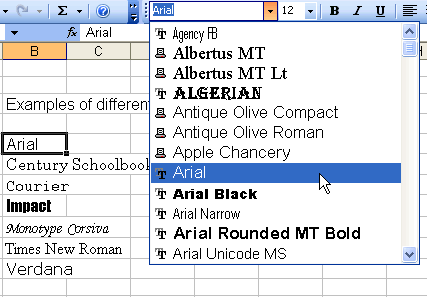
- Click on the typeface of your choice.
- The selection list closes, and the new font is applied to the selected cells.
Changing font type, size, and color
To apply a font size to information in a cell:
The font size list varies from typeface to typeface. The Arial font sizes, for example, are 8, 9, 10, 11, 12, 14, 16, 18, 20, 22, 24, 26, 28, 36, 48, and 72.
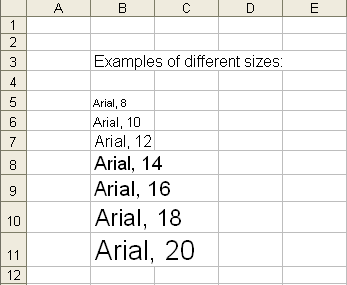
- Select a cell or range of cells.
-
Click the down arrow to the right of the
font size
list box on the Formatting toolbar.

-
A drop-down list of available font sizes appears.
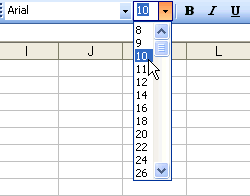
- Click the font size of your choice.
- The selection list closes, and the new font size is applied to the selected cells.
Changing font type, size, and color
To apply color to information in cells:
- Select a cell or range of cells.
-
Click the down arrow to the right of the
font color
list box.

-
A drop-down list of available colors appears.
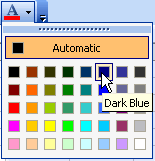
- Click the color of your choice.
- The selection list closes, and the new font color is applied to the selected cells.
Underline, italics, and bold
In addition to the typeface, size, and color, you can also apply bold , italics , and/or underline font style attributes to any text or numbers in cells.
To select a font style:
- Select a cell or range of cells.
-
Click any of the following options on the Formatting toolbar.

- Bold button: (Ctrl + B).
- Italics button: (Ctrl + I).
- Underline button: (Ctrl + U).
- The attribute(s) selected ( bold , italics , or underline ) are applied to the font.
 The
bold
,
italics
, and
u
nderline
buttons on the
Formatting
toolbar are like toggle switches. Click once to turn it on, and click again to turn it off.
The
bold
,
italics
, and
u
nderline
buttons on the
Formatting
toolbar are like toggle switches. Click once to turn it on, and click again to turn it off.
Design and apply styles
Styles can save a lot of time when formatting a spreadsheet. A style is a unique collection of font attributes (number, alignment, font, border, patterns, and protection). Many different styles can be created in a spreadsheet, each with different attributes and names. When applied to a cell, information in it resembles the attributes defined for that style.
To apply a style:
- Select the cell or range of cells.
-
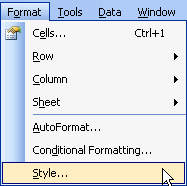
Choose
Format
 Style
from the menu bar.
Style
from the menu bar.
-
Select a style from the
Style name
drop-down list.
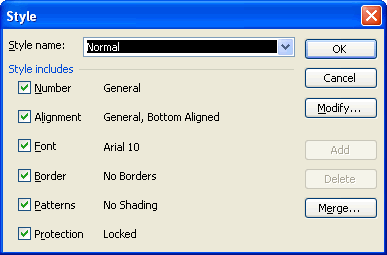
 You can change the style attributes (number, alignment, font, border, patterns, and protection) for any style name.
 You can create new styles by clicking the
Add
button in the Style dialog box.
You can create new styles by clicking the
Add
button in the Style dialog box.
Adding a border to cells
Borders can be applied to cells in your worksheet to emphasize important data or to assign names to columns or rows.
To add a border to a cell or cell range:
- Select a cell or range of cells.
- Click the down arrow next to the Borders button.
-
The Border drop-down appears.
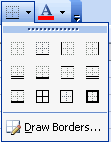
- Choose a borderline style from the Border drop-down menu.
- The selected cells display the chosen border.
Adding color to cells
Colors can be applied to cells in your worksheet to emphasize important data or to assign names to columns or rows.
To add color to a cell:
- Select a cell or range of cells.
-
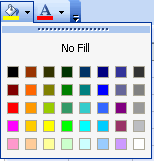
Click the down arrow next to the
Fill Color
button. A
Fill Color
drop-down menu displays.
-
Choose a
fill color
from the
Fill Color
drop-down menu.
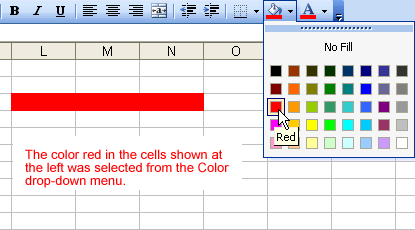
- The selected cells display the color.
Challenge!
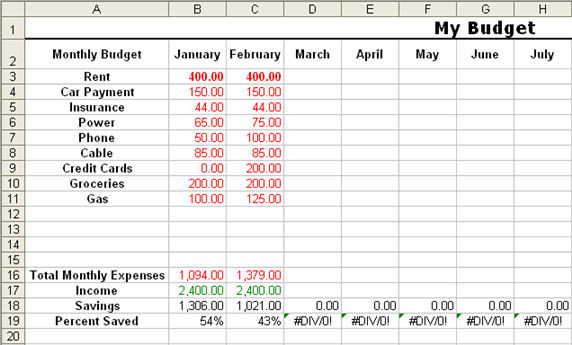
- Open your Monthly Budget file.
- Bold the words My Budget in row 1, and change the font to Verdana, size 14.
- Format the other labels (Rent, Car Payment, Insurance, etc.) as Arial, bold, size 10.
- Use AutoFit to format columns A, J, L, and M.
- Change the font color of all of your expenses to RED .
- Change the font color of all of your income to GREEN .
-
Apply at least one
border
.
An example:
- Save and close the document.